One of my careers before Curtis was working in the bookstore of the Getty museums. Prior to that I had little to no interest in ancient art (I prefer Surrealism and the Pre-Raphaelites,) but it was while working at the Getty Villa that I educated myself about it and grew to appreciate it. It was also there that I realized I wanted to teach rather than being forced to sell pencils and trinkets as add-on sales to people who didn’t really want them.
So if the ruins of Delphi don’t excite you, and art is more your thing, Delphi also has a small but excellent museum. There is a museum at Epidaurus as well, but it’s only one long room crammed with mostly broken statuary under poor lighting. Below are some highlights from the Delphi museum.
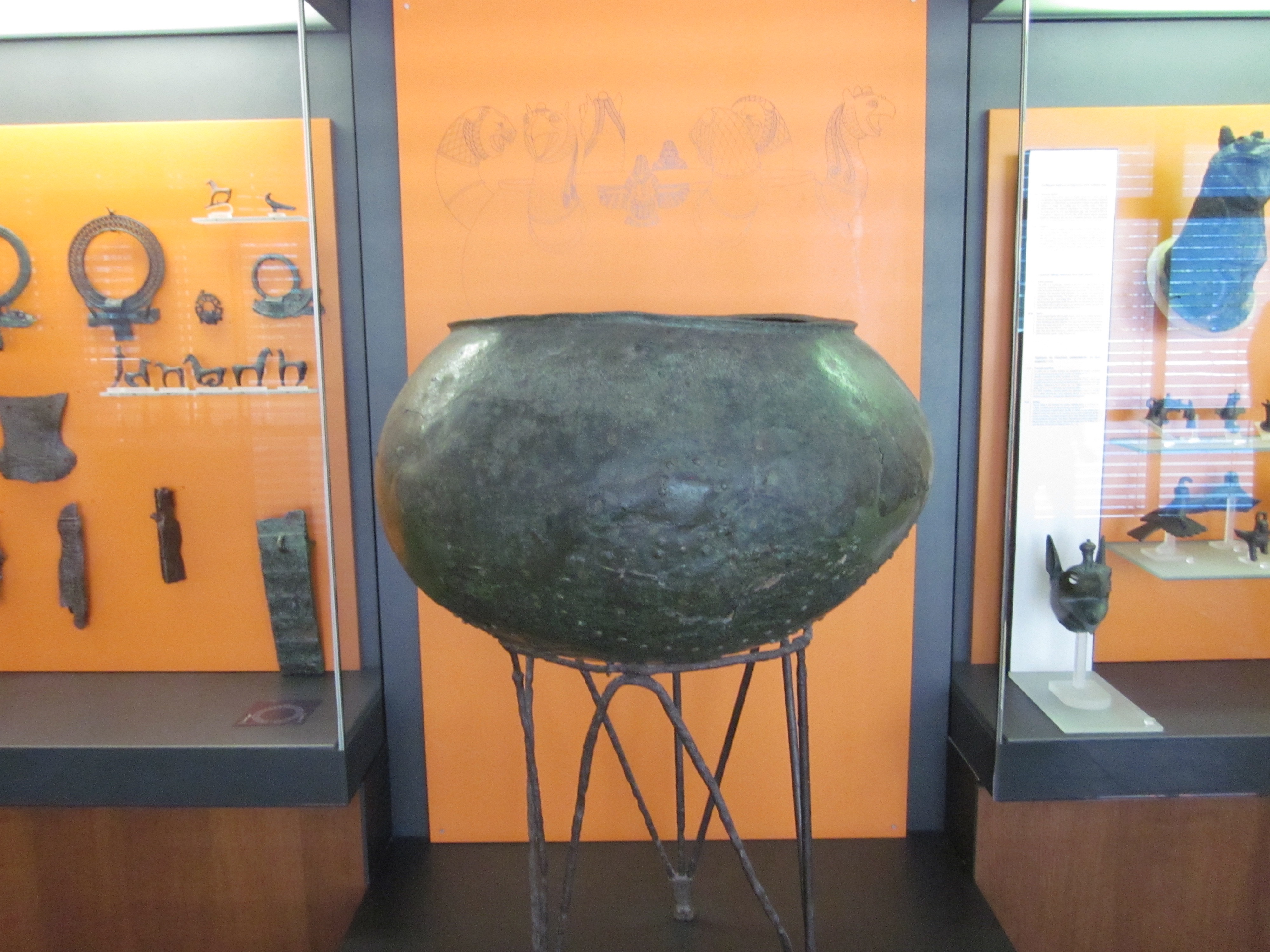 The first is this cauldron and tripod, neither of which were actually found in Delphi. The cauldron is from Crete and the tripod is a different style from a different year, but they’ve been put together on display so you get a sense of how they might have been in the sanctuary of Apollo. The cauldron would have been filled with incense, water, perfumed oils, and that sort of thing while the Pythia would be seated on a chair above or even over it in her own personal sweat lodge speaking in tongues like Diamanda Galas.
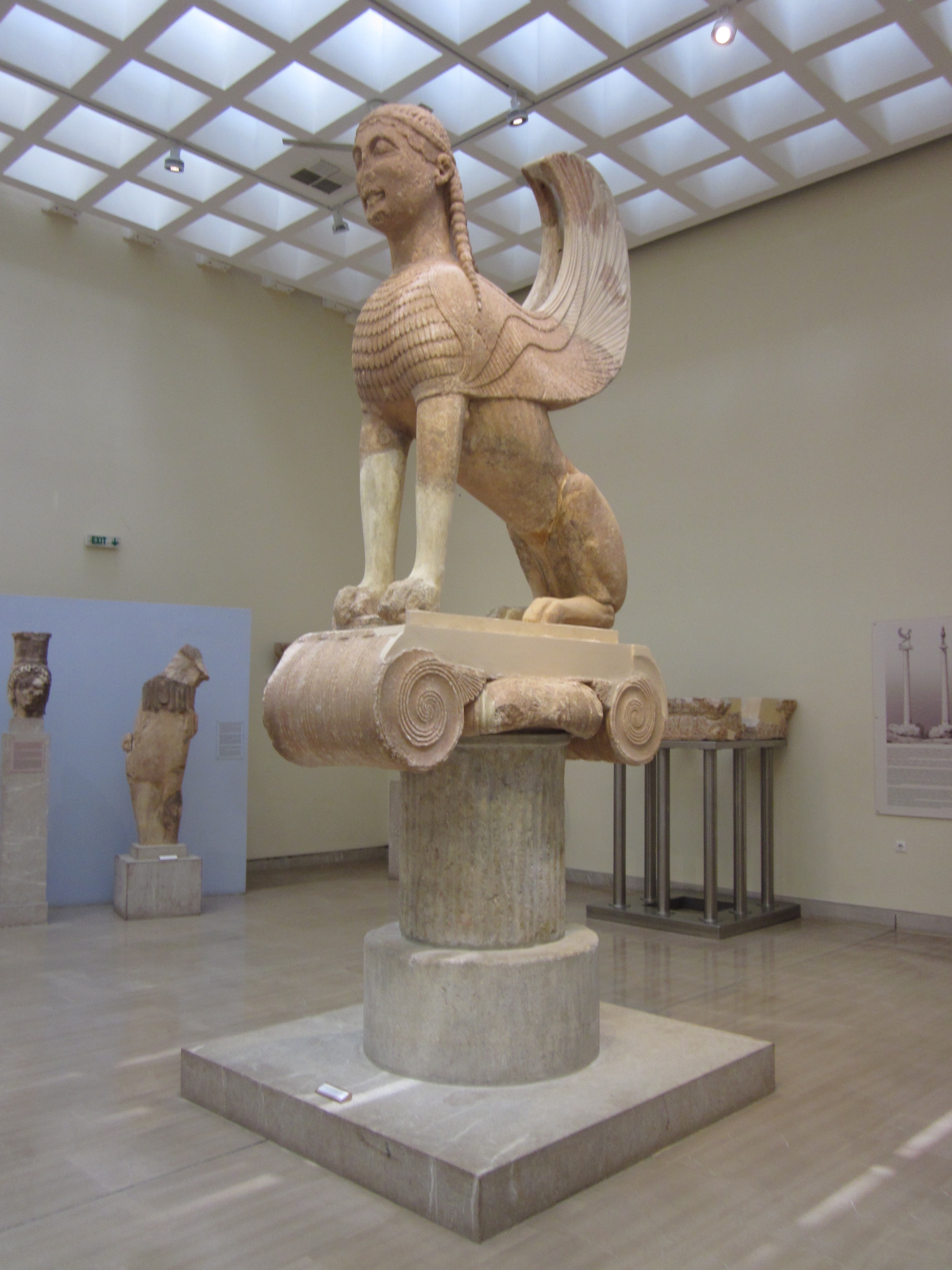 Another interesting piece is the Sphinx dedicated to the sanctuary of Apollo by the citizens of Naxos, the largest island in the Cyclades. The actual sphinx portion of this statue is seven feet tall so you can imagine how imposing it would have been on a high pillar in front of the temple. The sphinx is Egyptian in origin, but this is the Greek version and the type that would have posed the world’s most famous riddle to Oedipus. If you want a refresher on who Oedipus was, ask me or a former sixth-grader later. Suffice it to say that he was from Thebes, which is halfway between Athens and Delphi.
The last piece I’ll show you is one of the masterpieces of the ancient world, due to the state of its preservation and the fact that it exists at all. This is the Charioteer.
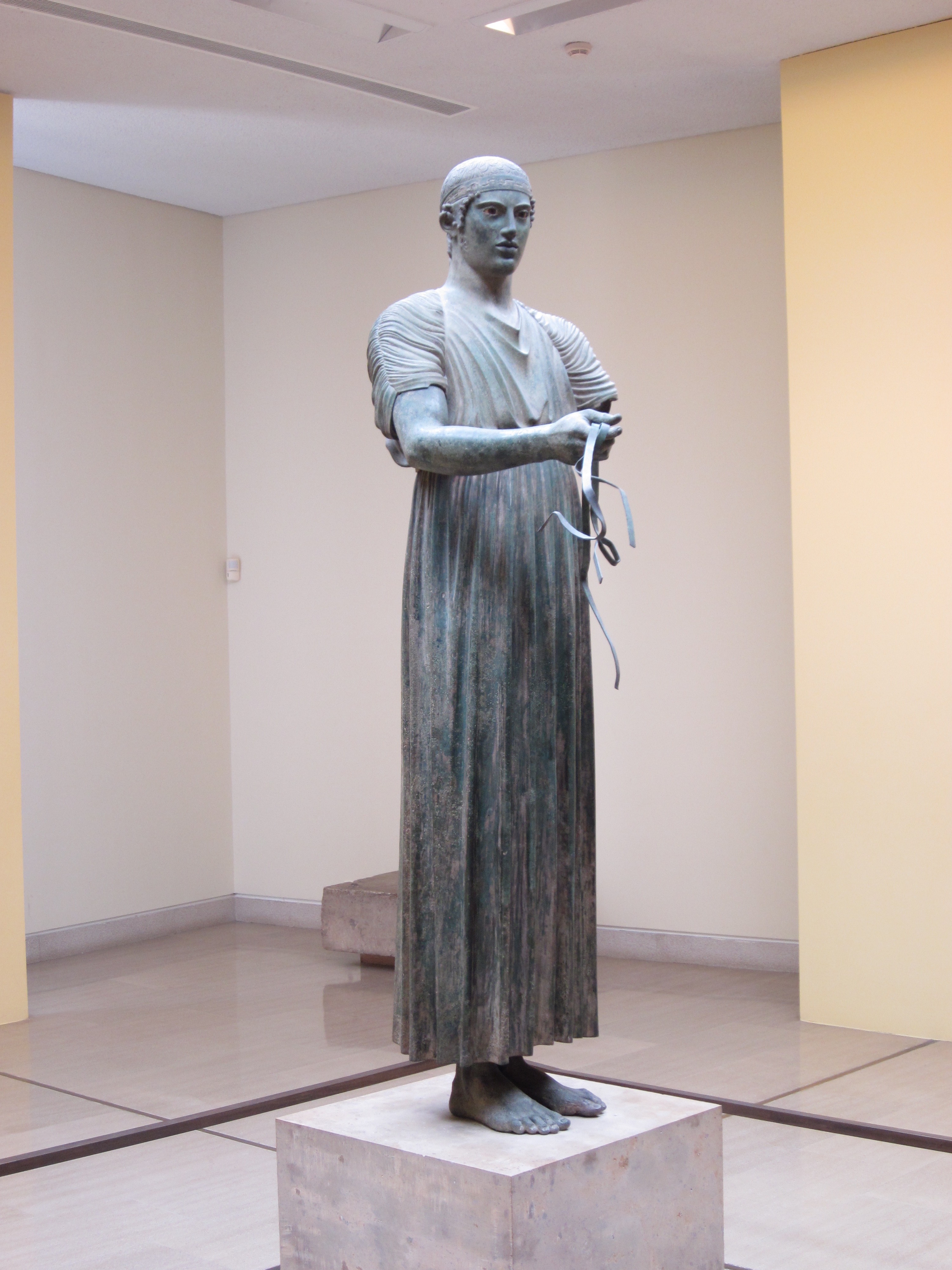 He’s a life-size bronze and part of a larger sculpture group which would have included a four-horse chariot, two horses, and their grooms. The detail is amazing, and the sculpture retains its original eyes of glass paste. Fragments of the rest of the sculpture group were assembled on one wall of the room in which the Charioteer is displayed. If you didn’t know already, bronze statues of this size and from this time period are incredibly rare; most were broken into pieces and melted down through various centuries to make weapons and armor: knives, spearheads, helmets, cannonballs, bullets and the like.
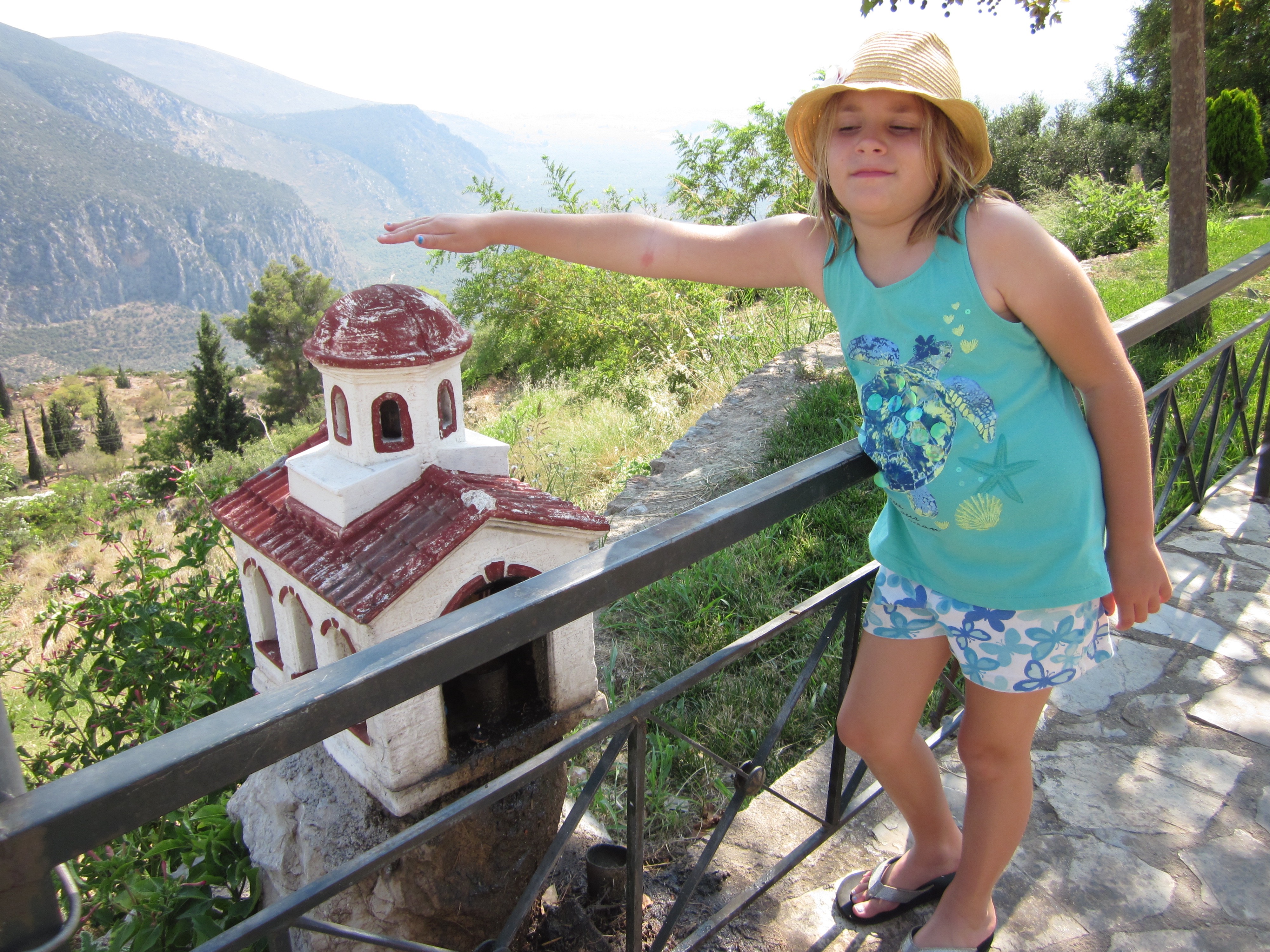
Not far down the road from the monuments and the museum you’ll find the little town of Delphi. And when I say little, I mean little. “Downtown” Delphi is two streets a couple of hundred yards long that merge together at the end. Not even a stop sign, let alone a stop light. And they could use one. My fabulous helper is pointing out an iconostasis, so you can tell its actual size and wouldn’t think it was a picture of a church in the distance. These are roadside memorials, and this one was at the bend in the road as you went up a hill. We’ve seen far too many of them. Some are simple wooden boxes with a candle or an icon inside, some are very elaborate and resemble nearby churches. All of them were made with great love and great loss.
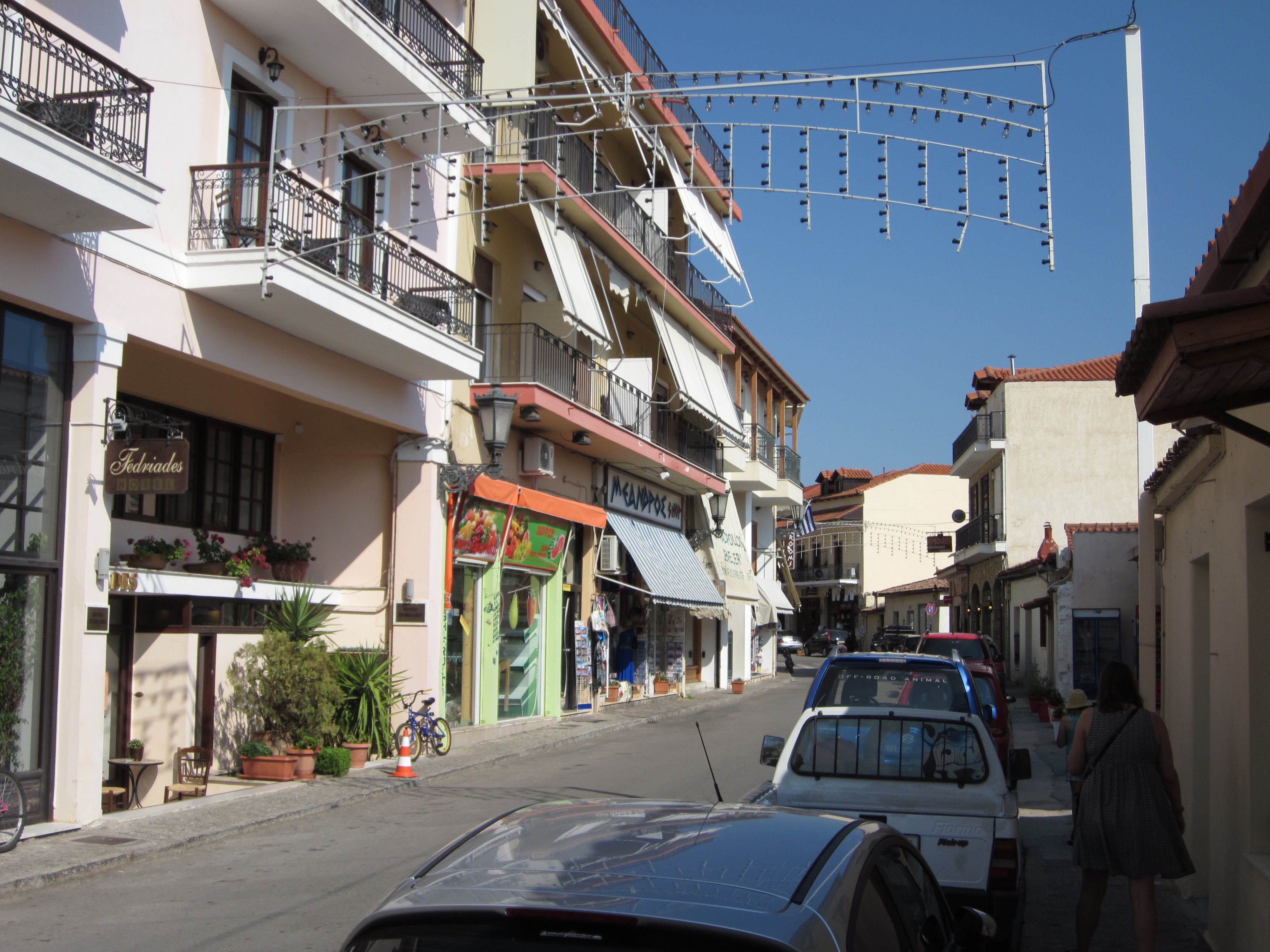
Shops were open and closed at whim since it’s not yet high tourist season. Most of the time we’d walk in and a child would be sitting behind a table and run to tell an adult that they had a customer. I saw something I wanted to buy but wanted to look down the street first, and by the time we came back from lunch less than an hour later, the shop was closed for the afternoon rest period. It simply wasn’t meant to be, and I found something better and at a better price when we got back to Athens anyway. C’est la vie.

 Mr. Frank in Athens
Thanks for providing the street scene picture, David. It brought to mind so many memories. Way back when, I tented through Greece with three friends. We made it a point to stop at Mom and Pop restaurants for meals because diners were invited into the kitchen to look at the moussaka or taste the spanakopita. I’m curious to know if the tradition still exists.
LikeLike