Slow internet connections will be the death of this blog. We have been doing and seeing so much, that I have to choose between blogging or sleep, and when I do get the chance, it takes forever to load pictures. As I type this, I’m sitting on the edge of the bathtub while Susan and Dani are sleeping. We have been on guided excursions which will end after tomorrow, and then I’m sure I’ll have the chance to catch up. Anyway… back to our story.
After passing through Corinth on Tuesday, we headed further into the Peloponnese to the ruins of Mycenae, the center of the Mycenaean world between the 1600 and 1100 BCE. The acropolis of Mycenae was inhabited as early as 5,000 years ago, and fortification of the town began around 1350 BCE. The walls surrounding the town are referred to as “Cyclopean,” because the blocks are so huge, it is believed that they could have only been put in place by the mythical Cyclops. You enter the acropolis through the Lion’s gate which was finished around 1250 BCE, and the triangular stone above the lintel with two headless lions (they probably had bronze heads facing outward) may represent the “coat of arms” of the House of Atreus.
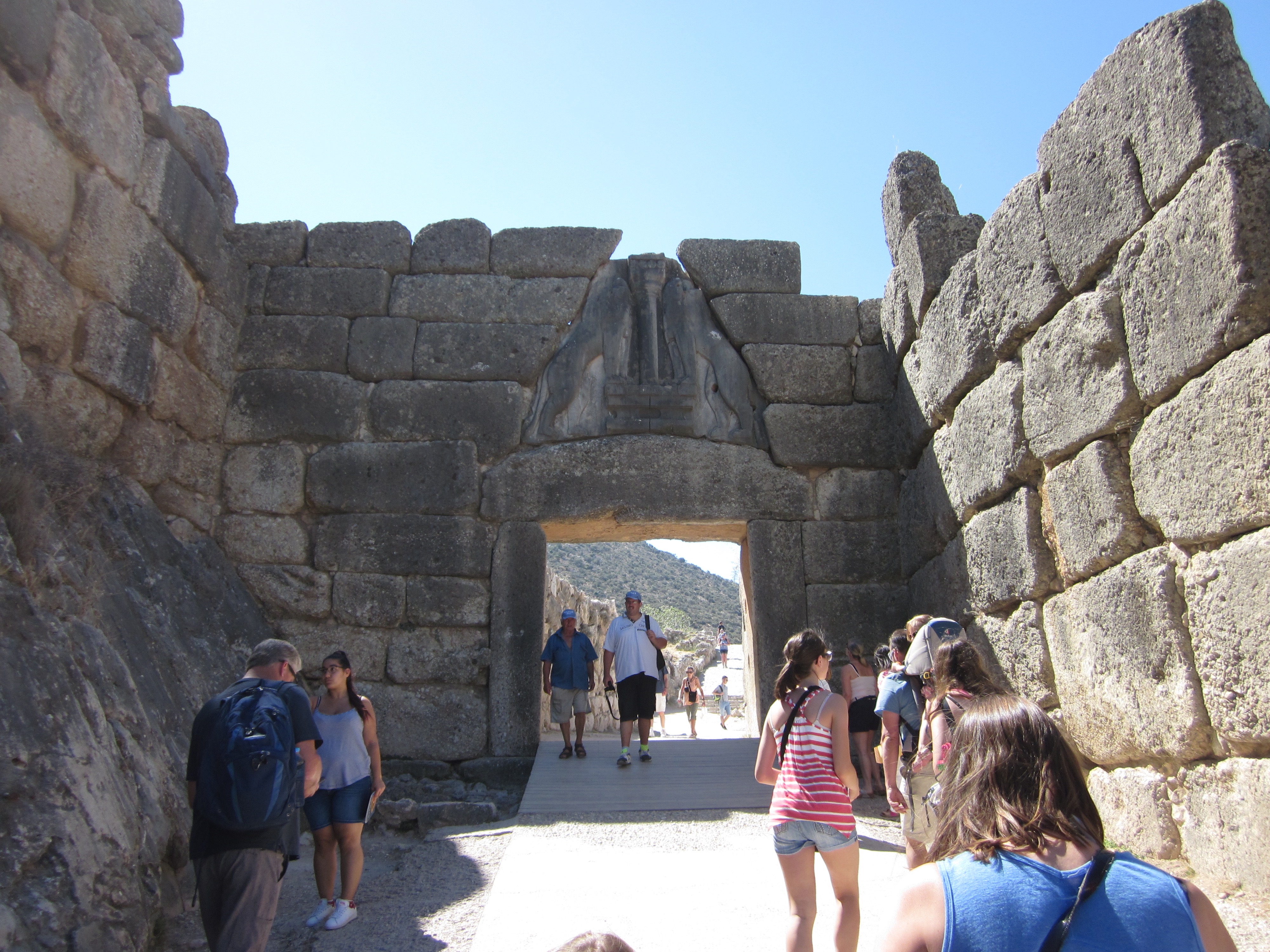 According to Homer, Atreus as you might recall (or not) was the father of Menelaus and Agamemnon. Menelaus was married to Helen, who was either abducted or willingly ran off with Prince Paris of Troy, and Menelaus asked his brother to help him get her back. Somehow Agamemnon upset the goddess Artemis and had to sacrifice his daughter, Iphigenia, to make amends. Is any of this starting to sound familiar?
Agamemnon goes off to fight the Trojan War, leaving his wife and two surviving children behind, Orestes and Electra. Clytemnestra doesn’t know if or when Agamemnon is coming back, so she hooks up with Aegisthus, and when Agamemnon finally does come home, she and/or her lover kill him. Then Orestes avenges his father’s death by killing his own mother and Aegisthus. Believe it or not!
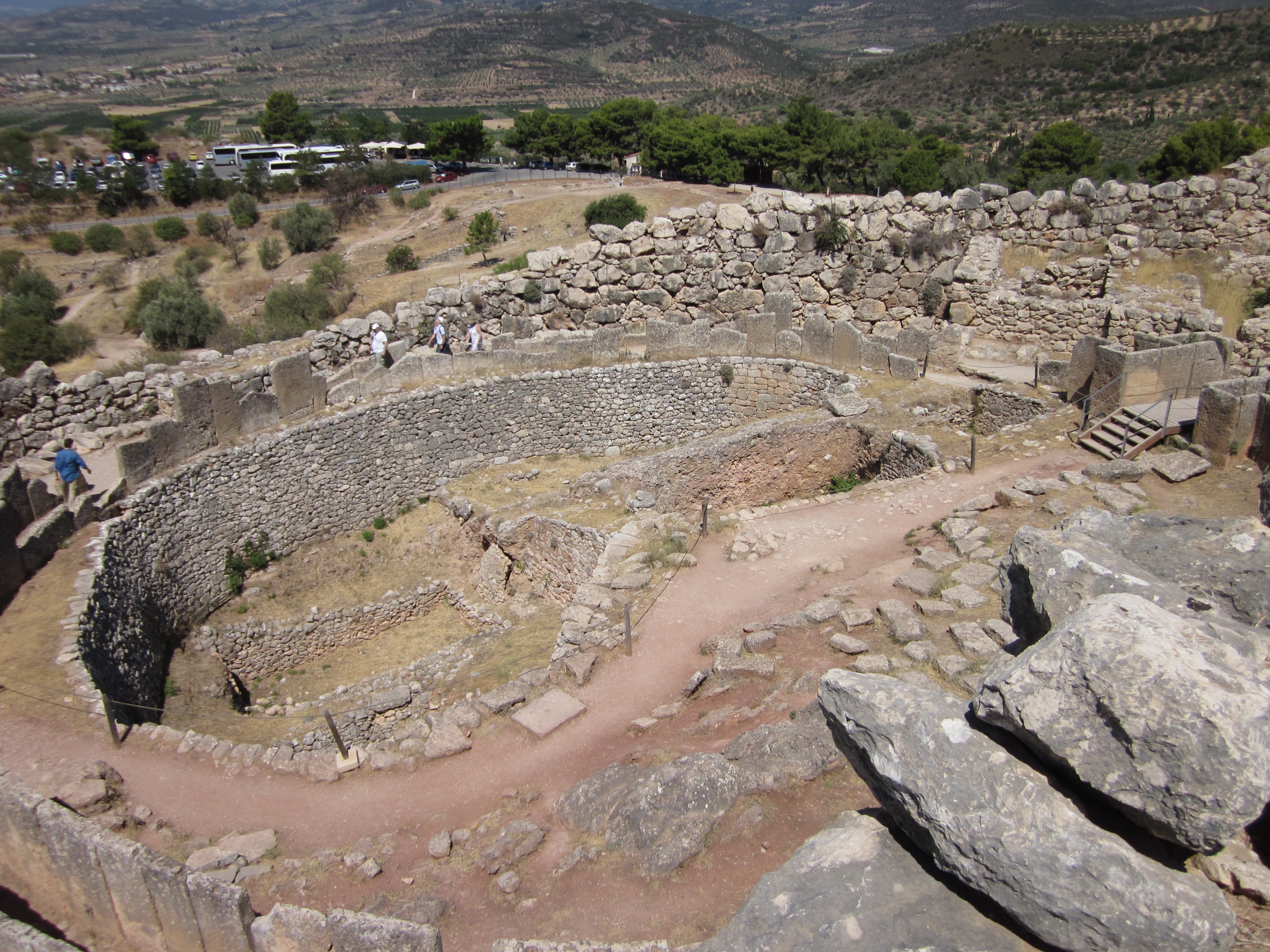 After passing through the Lion’s Gate you see “Grave Circle A” on your right, which was one of the first things that German archaeologist Heinrich Schliemann uncovered in 1874. He (wrongly) assumed that this was the tomb of Agamemnon, because he found so much gold with the bodies found there. This included five gold burial masks, the most magnificent of which is (still inaccurately) named the “Mask of Agamemnon.” It’s in the National Archeological Museum in Athens, and I haven’t been there yet, but hopefully I’ll post a picture of it (or not.)
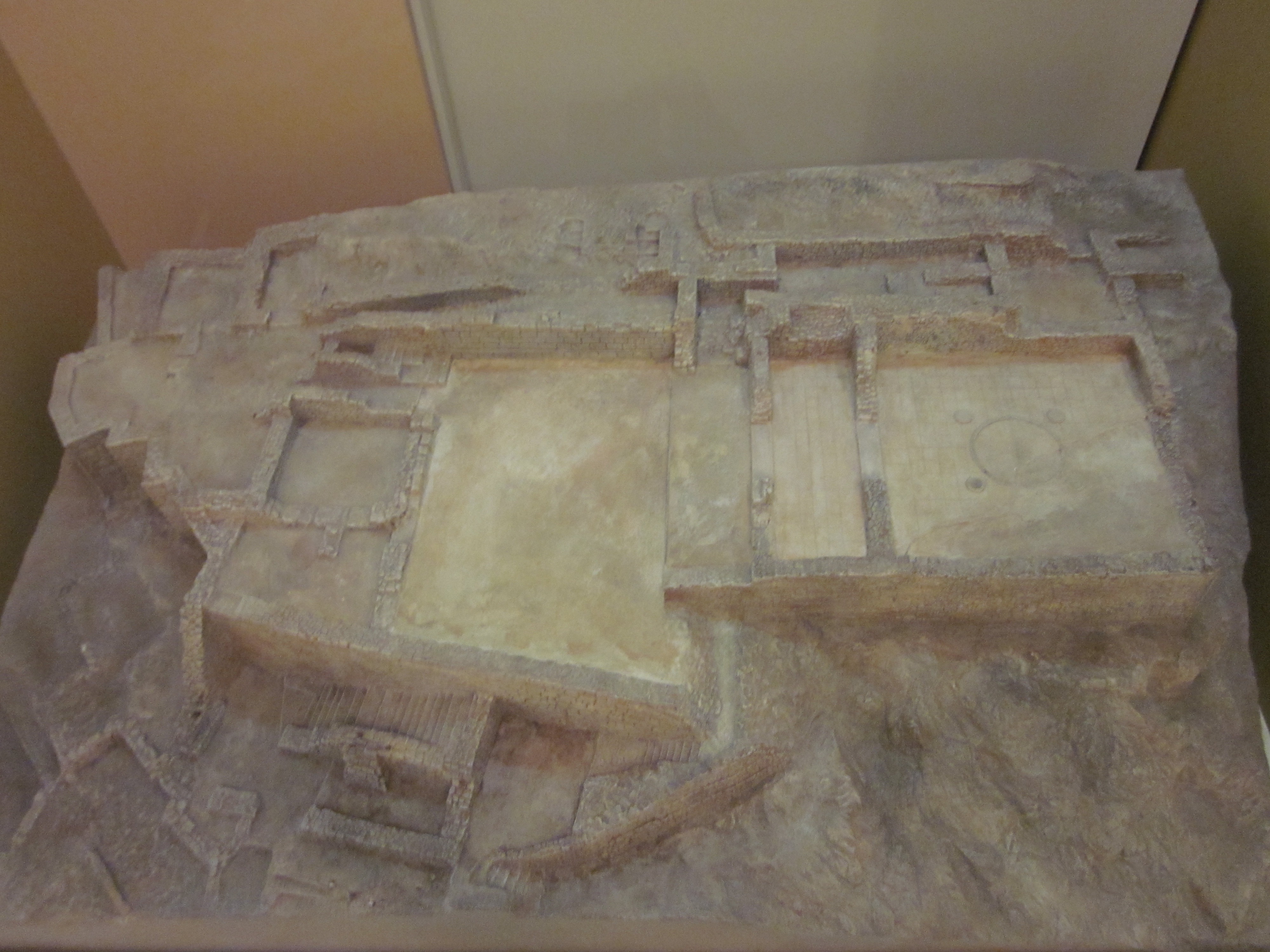
Seeing the ruins of Mycenae reminded me a lot of the sights we see on the 6th grade Southwest trip. These buildings had stone foundations, but the walls were made of mud bricks. Below on the right is a model of the foundations for just the Palace of Agamemnon, which may have been up to three stories high. Pretty impressive architecture for over 3,000 years ago.
 Agamemnon’s real tomb (or not) is about 1/4 mile southwest of the acropolis, and is shaped like a beehive inside after you get past the imposing entrance. There was a massive stone door and tons of earth piled in front of the entrance, but it don’t mean a thing if you can find the keystone at the top of one of these tombs, remove it, and shimmy your way down a rope Indiana Jones style to all the riches below.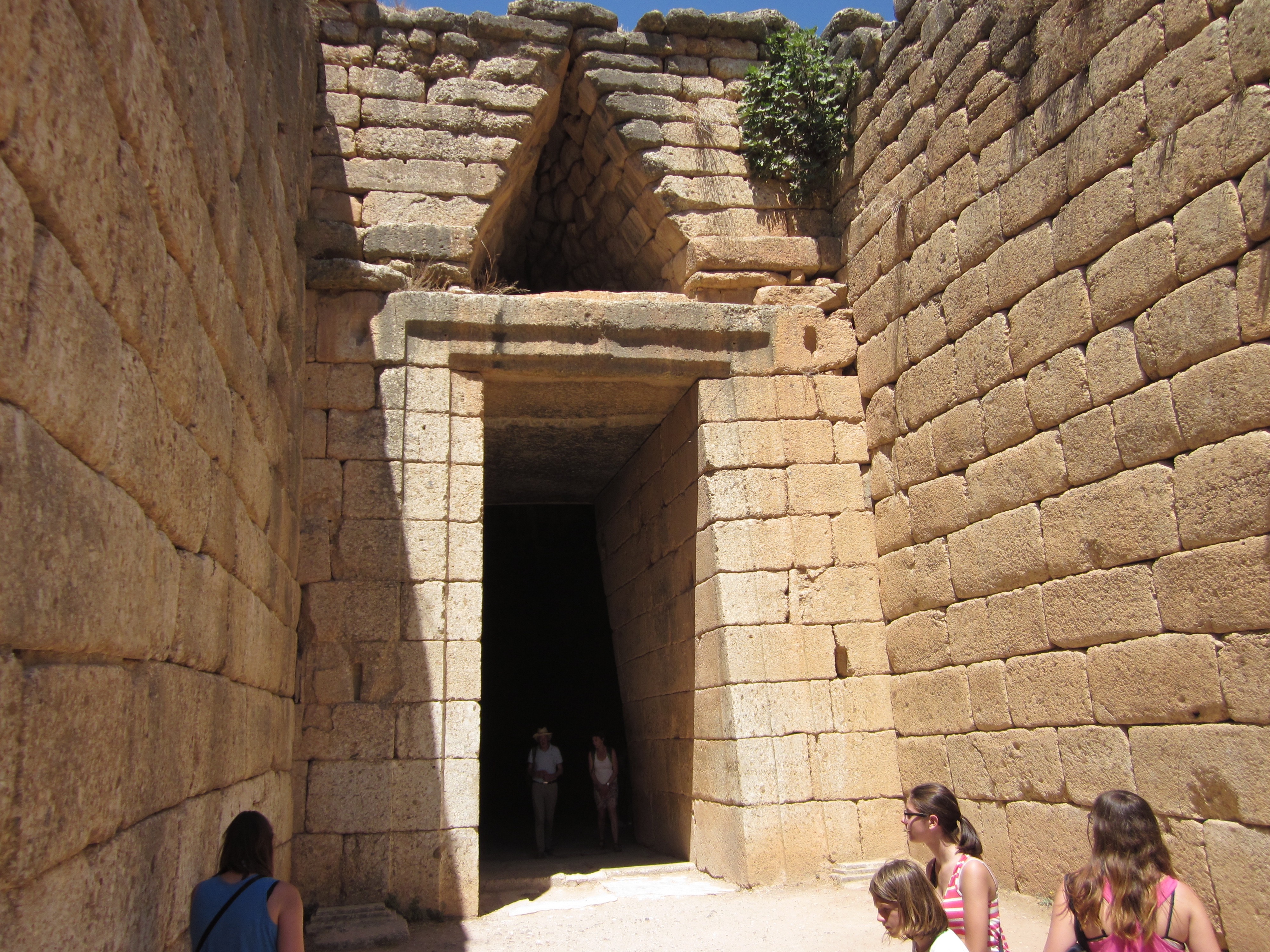
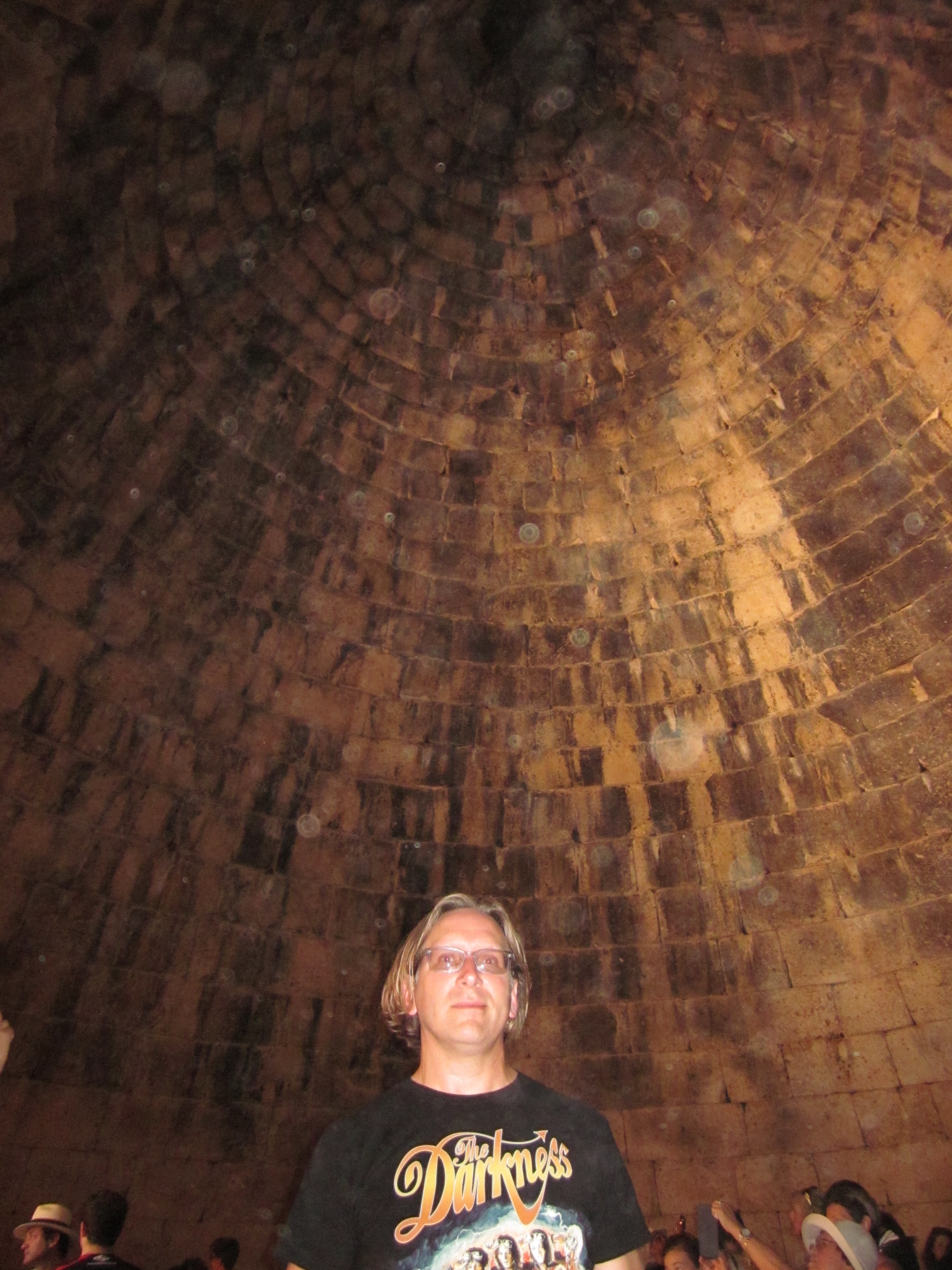 This tomb is also referred to as “The Treasury of Atreus,” which is funny considering everything in it had been plundered by the time it was discovered. Which brings us back to the issue of gold.
Gold was not yet mined in the region during that time period, so it is believed that the Mycenaeans must have been trading with Egypt, perhaps even offering them protection by sea, and getting paid in gold; but other countries with which the Mycenaeans were trading (Syria, Palestine, etc.) were hit by multiple raids which wreaked havoc on the Mycenaean economy and eventually lead to the decline and fall of the Mycenaean empire in the 12th century BCE. I’ll let you draw your own parallels to Greece’s current economic struggles. The acropolis continued to be inhabited until 468 BCE, when the Argives destroyed it and drove out all the inhabitants. By the 2nd century CE, all that was left were the ruins we see today.

 Mr. Frank in Athens
Great photos of the tomb entrance and interior! It looks huge. Also loved reading about the keystone detail.
LikeLike
I called it a beehive, which most people do, but it’s technically a tholos tomb. The interior is roughly 40ft in diameter at the floor and 40 ft high, with the stones incrementally set closer at each level until it ends with a keystone at the top. There is another square room attached to the side where they believe the remains of the funeral feast were stored. After a person died, they had a feast and buried the remains near the corpse so they would have food on their journey to Hades. It’s kind of like they sent them “home” with leftovers, I suppose.
LikeLike