I’ll start with the cliff-hanger I left you with yesterday. Last night we saw Aristofaniade at the Odeon of Herodes Atticus. On the left is a view of it from the Acropolis of Athens. On the right is a photo from the back of the house, so to speak, as it started to fill up.
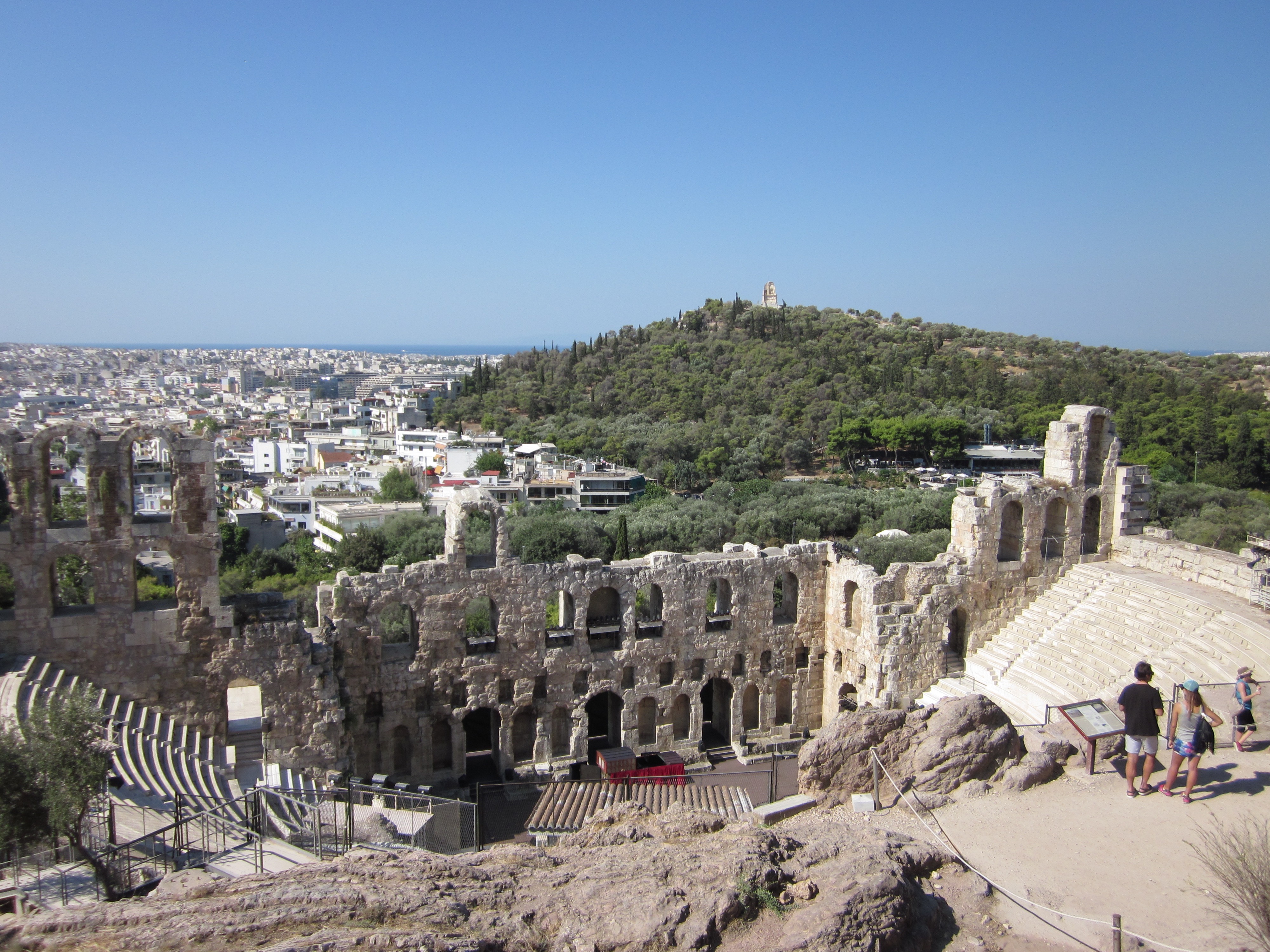
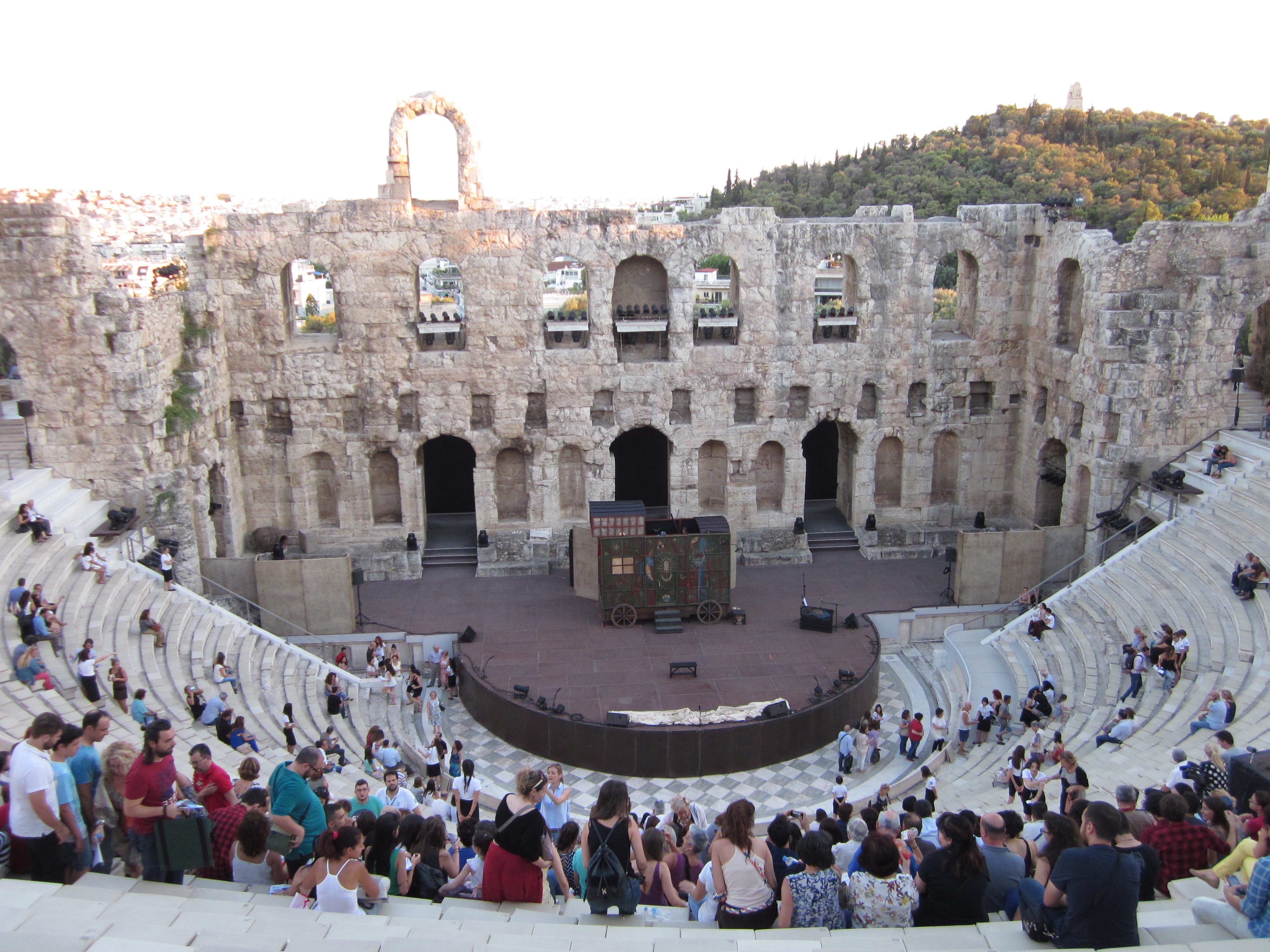
It seats 5,000 people and by the time the show started at 9:15pm there were maybe 25 empty seats. In the theatre company I belong to, most of the time we are happy if there are 25 people in the audience. Granted our venue isn’t quite this nice, and we aren’t usually part of a huge festival. The production was a contemporary play with a classical subject matter, and performed entirely in Greek. When I explained this fact to my daughter, she gave me a look worthy of Oliver Hardy as if to say, “Well, this is another fine mess you’ve gotten us into.”
If you’ve never seen a play in a language you don’t speak, I don’t recommend it unless you are familiar with the play already, or simply want to enjoy the skill of the actors. As it is a new play, I knew nothing about it, but I’ve read most of Aristophanes’s plays, and it seemed like there would be enough music in it to keep my family interested. To Dani’s and Susan’s credit, they were able to stay until 10:30, and then left simply because they were wiped out from our adventures earlier in the day. I had to find out how it ended, and was enjoying myself, even though I only know about ten words in Greek.
The play started with the playwright Aristophanes rehearsing a small group of actors for a swordfight scene. They aren’t understanding his artistic vision, so like any good director he acts it out for them, and drops dead from his exertions. His actors of course applaud him for the most realistic stage death they have ever seen, and then realize what has happened. The action freezes, and a Mephistophelian figure appears to take Aristophanes away to Hades. Orpheus and Euridice now enter the play and somehow a deal is struck through Aristophanes’s persuasiveness, whereby if he can perform all his past plays in one hour, then he will be given an extra week of life to finish his latest production. After many skillful costume changes by the five actors and one actress in the cast, and hilarious scenes with contemporary references; we return to the original scene of Aristophanes’s death, and he jumps up from his collapse with a start, much to his company members’ relief.
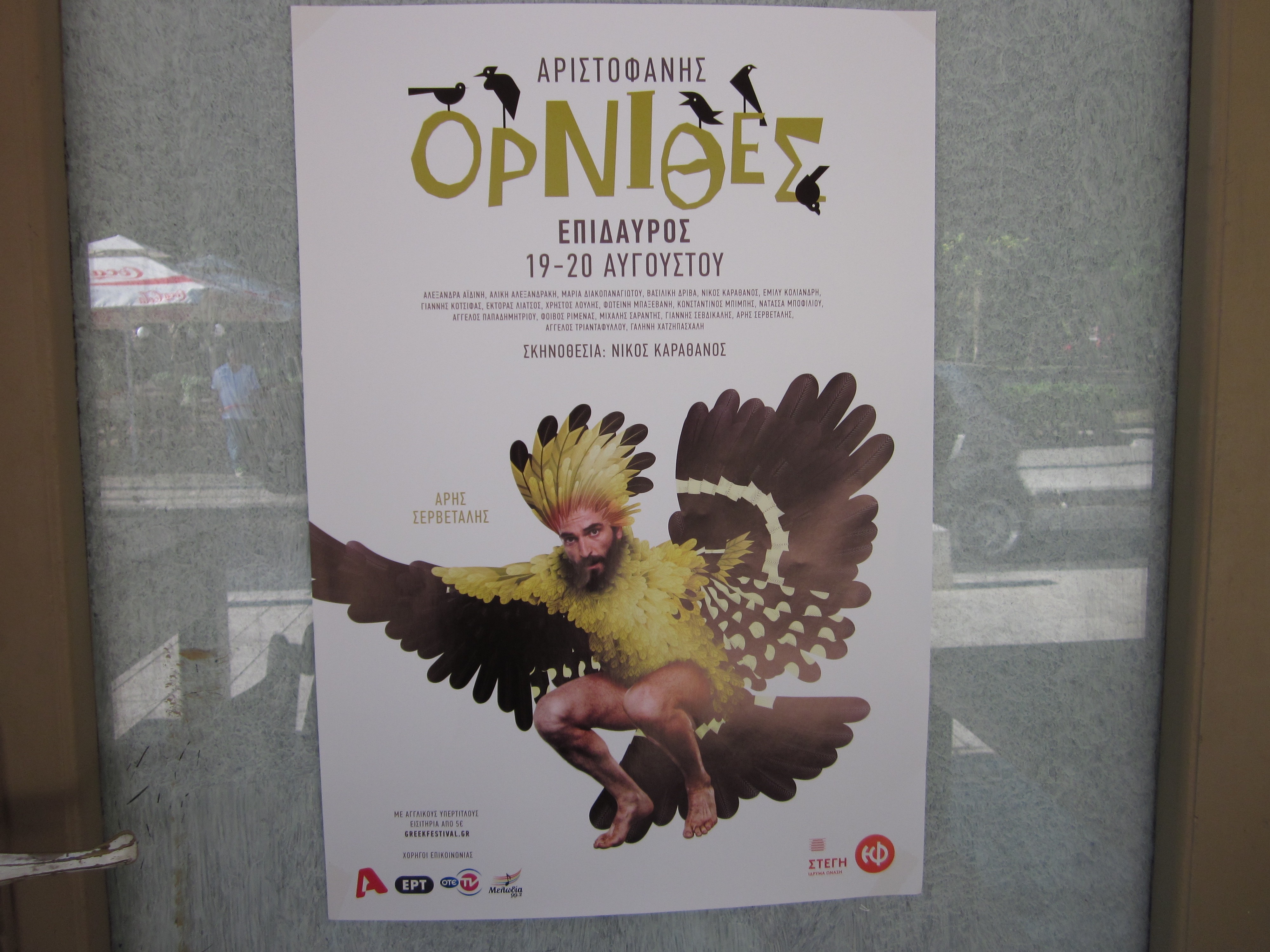
This is a poster for another play in the festival that is actually written by Aristophanes. You may have guessed that it’s called The Birds.
You also might have guessed that we visited the Acropolis (“high city”) of Athens earlier in the day with I don’t know how many thousands of other people. There were so many people, you sort of got the sense of what it was like when that was the city of Athens. It was well worth the hype, even though most of what you see has been reconstructed. Susan had to drag me away because I could not stop taking photos.
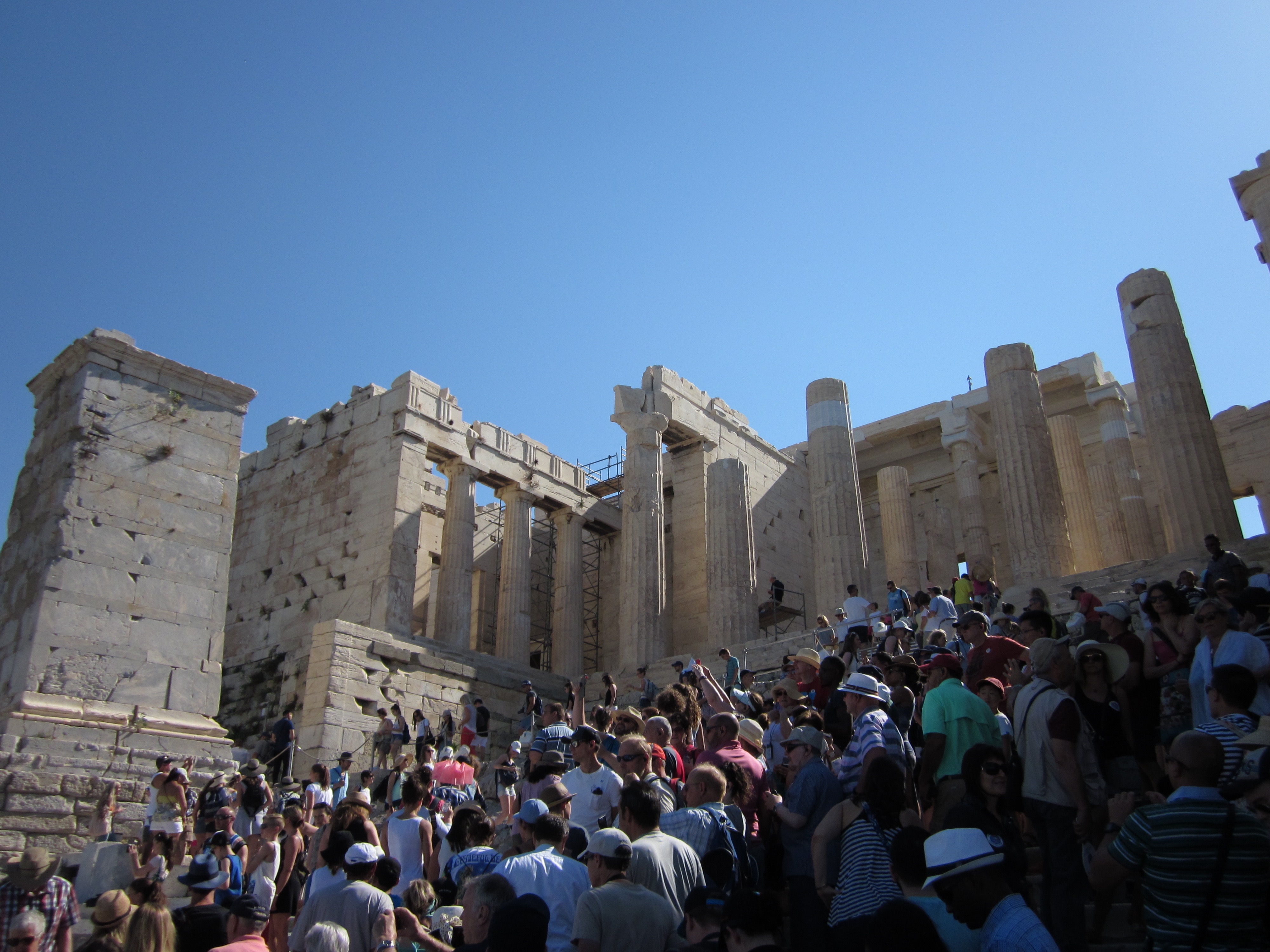
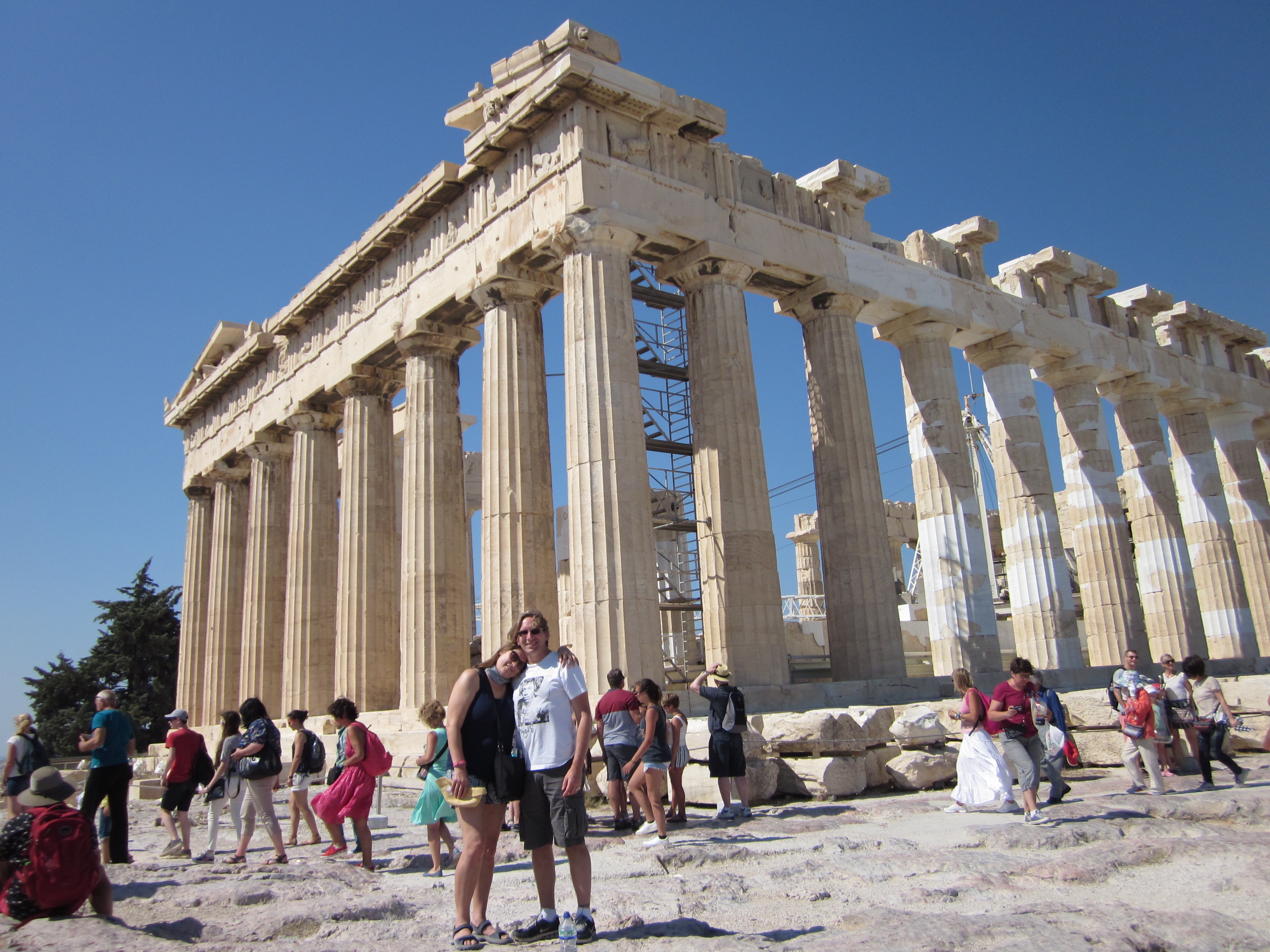
The first settlement on the Acropolis of Athens was during the Bronze age around 3,000 B.C.E. The Parthenon was built during the Classical period in the 5th Century B.C.E., and remains an architectural marvel of design. The columns are fluted, which means they are smaller in diameter at the top than the bottom, making the columns “lean in” to support the weight of the roof which was constructed of wood, and also protecting it from earthquakes. One thing I hadn’t known was how earthquake conscious the Ancient Greeks had been with their construction. Each of the columns is made of many stones, and each stone had holes drilled into it which then were filled with lead posts before the next stone was fitted on top of it. It’s similar to the way we use rebar and mesh in concrete construction today.
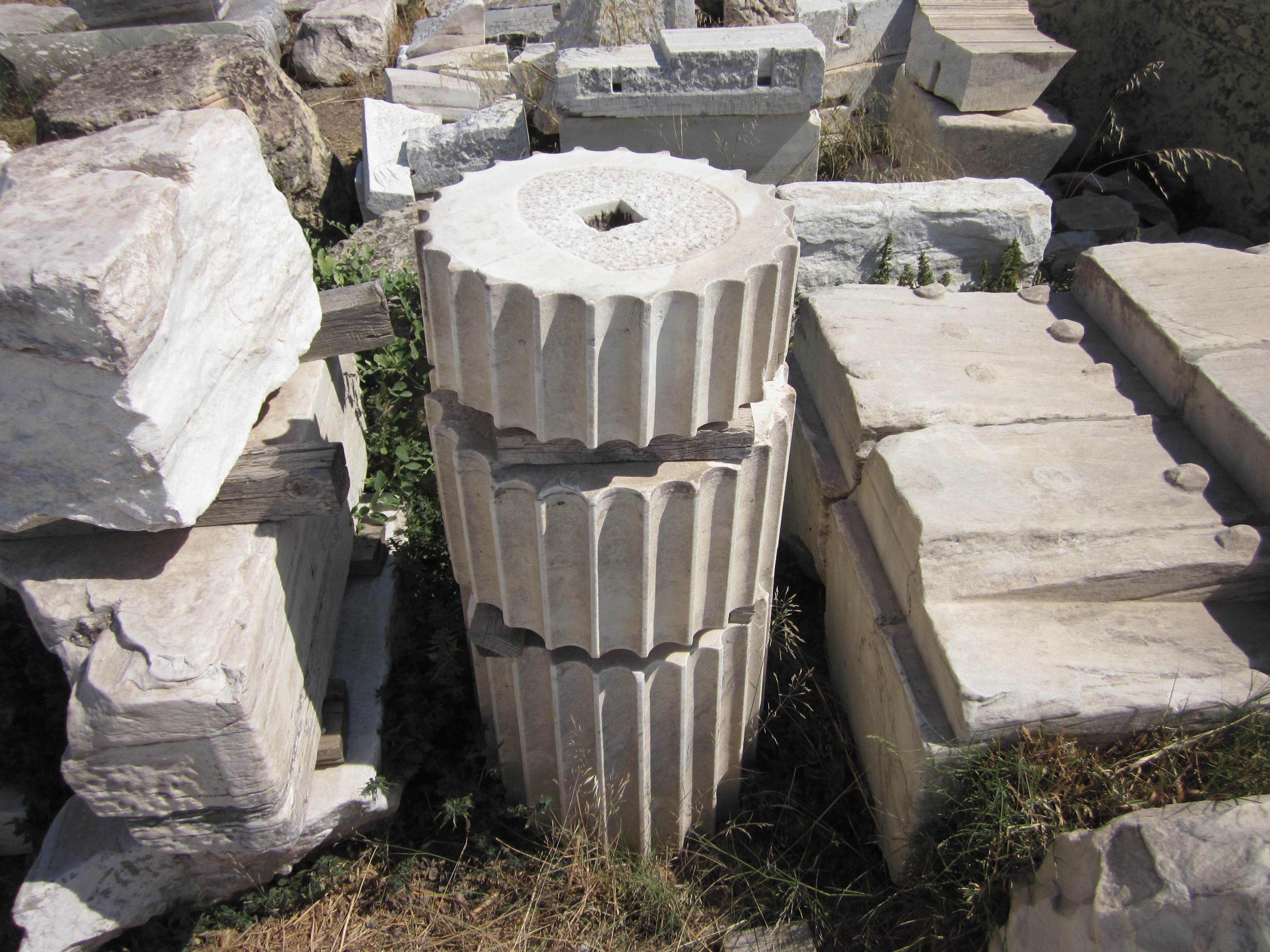
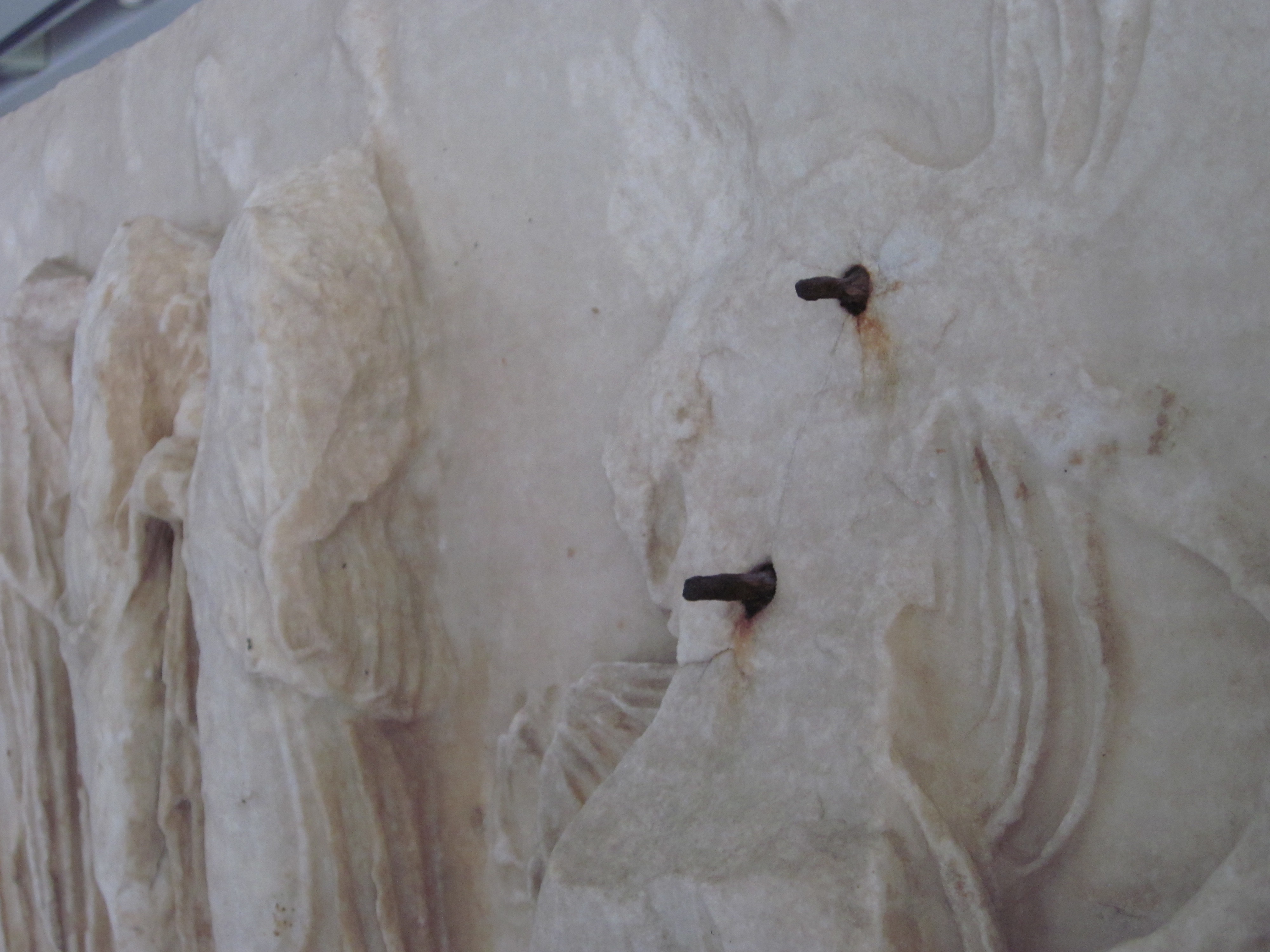
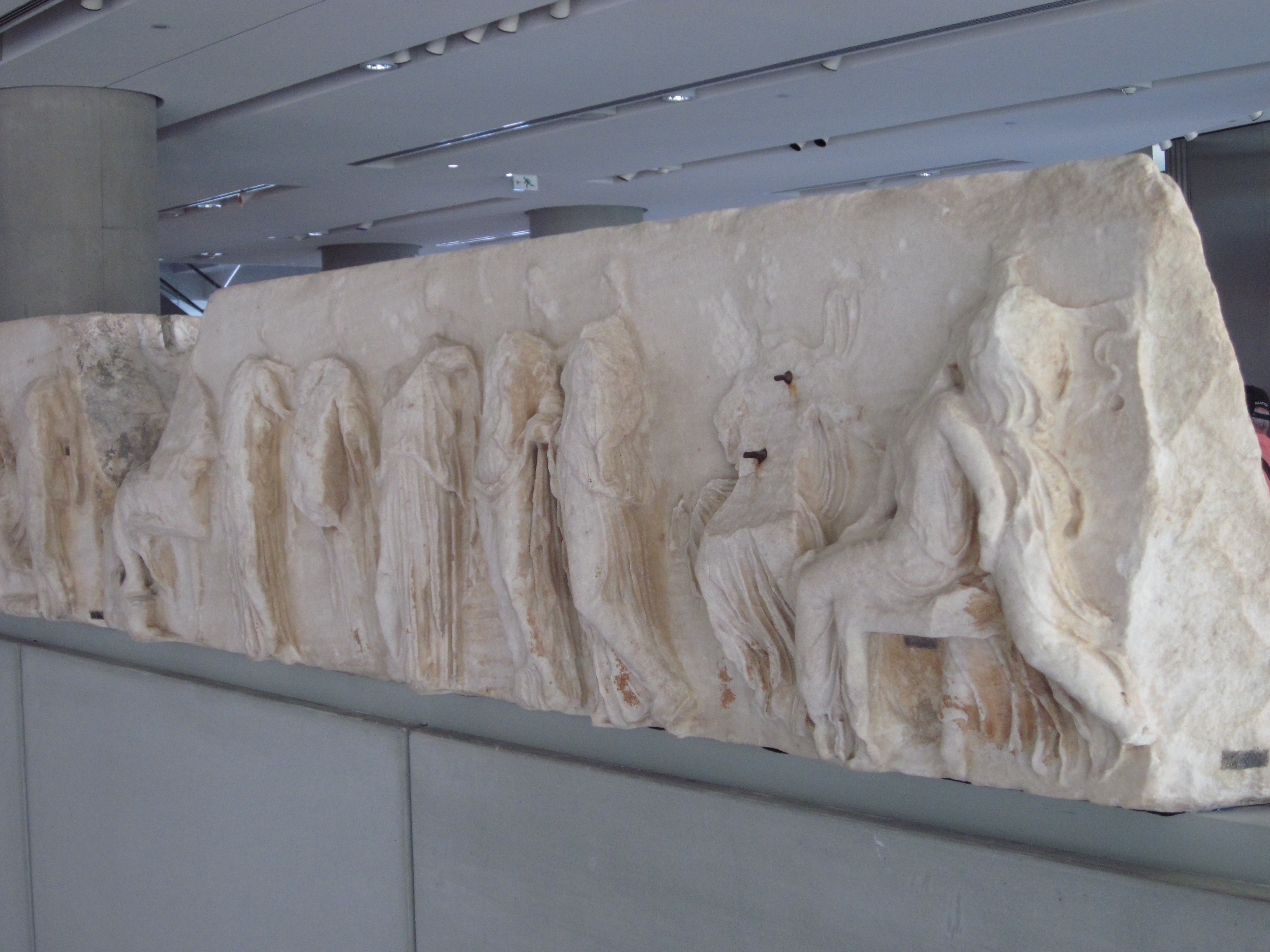
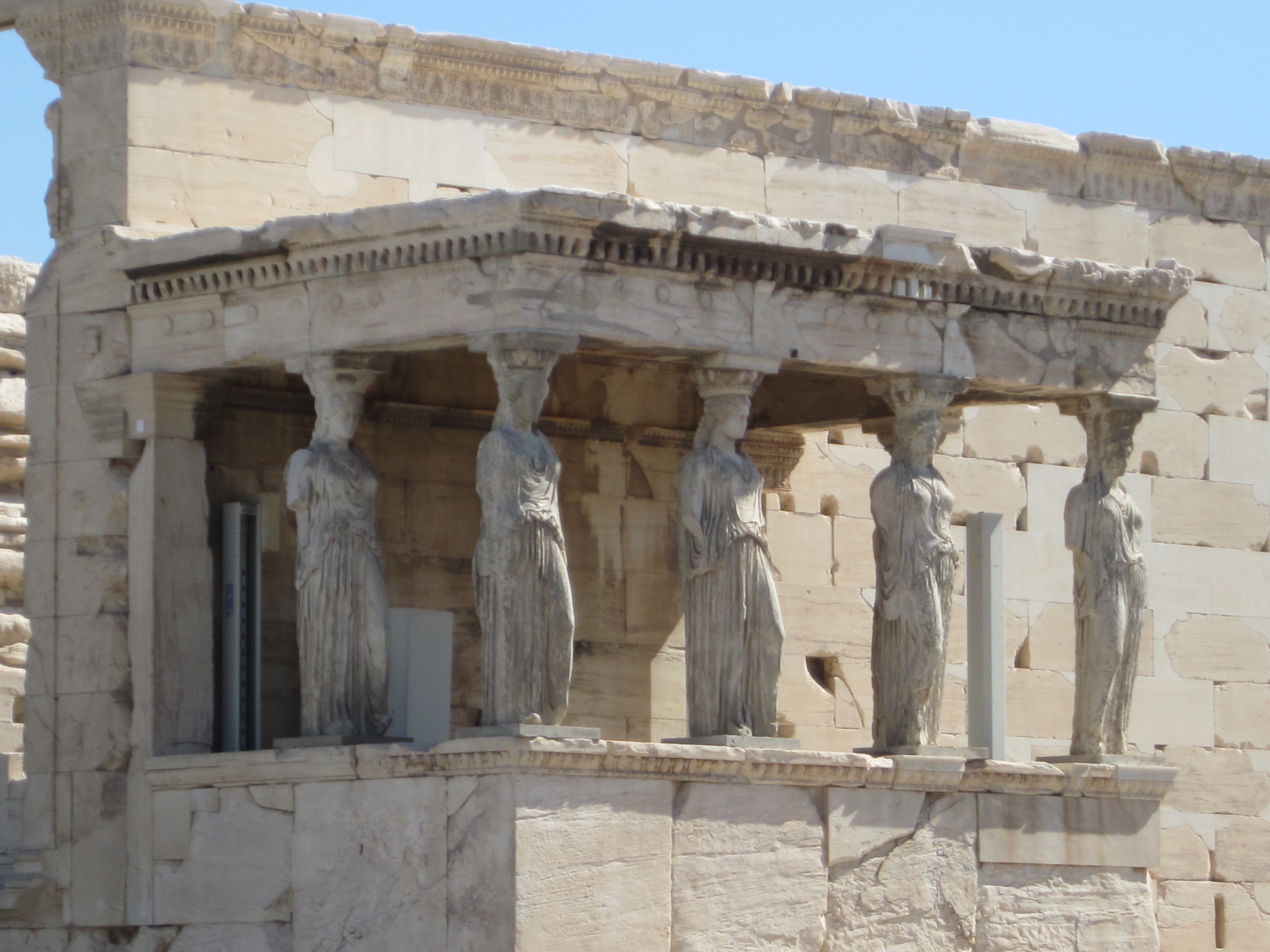
They used the same technique to attach separate pieces to “high relief” friezes if they were considerably large, or if the sculptor misjudged the grain of the stone and had to make repairs. There’s no way to erase your mistakes when you are dealing with huge slabs of marble that have been transported at great expense over a period of months from a mountain far away. The frieze shown, and the originals of the caryatids on the right are currently housed in the Acropolis Museum which deserves its own post on another day.

 Mr. Frank in Athens
While you were sitting in a theater with stone benches last night, I had the great fortune of seeing Betrayed in cushioned velvet chairs at the Mark Taper. What a thought provoking play that opened up great discussions about how diversity and tribal history color our perception of events. I thought of the variance between your and my experiences in two such different theaters on the same night, and I admire your having sat through an entire performance in a language you don’t speak! Just proves that good performance can transcend spoken language.
LikeLike